
Bridge the gap between planning and execution
Stop losing your strategy the moment testing starts.
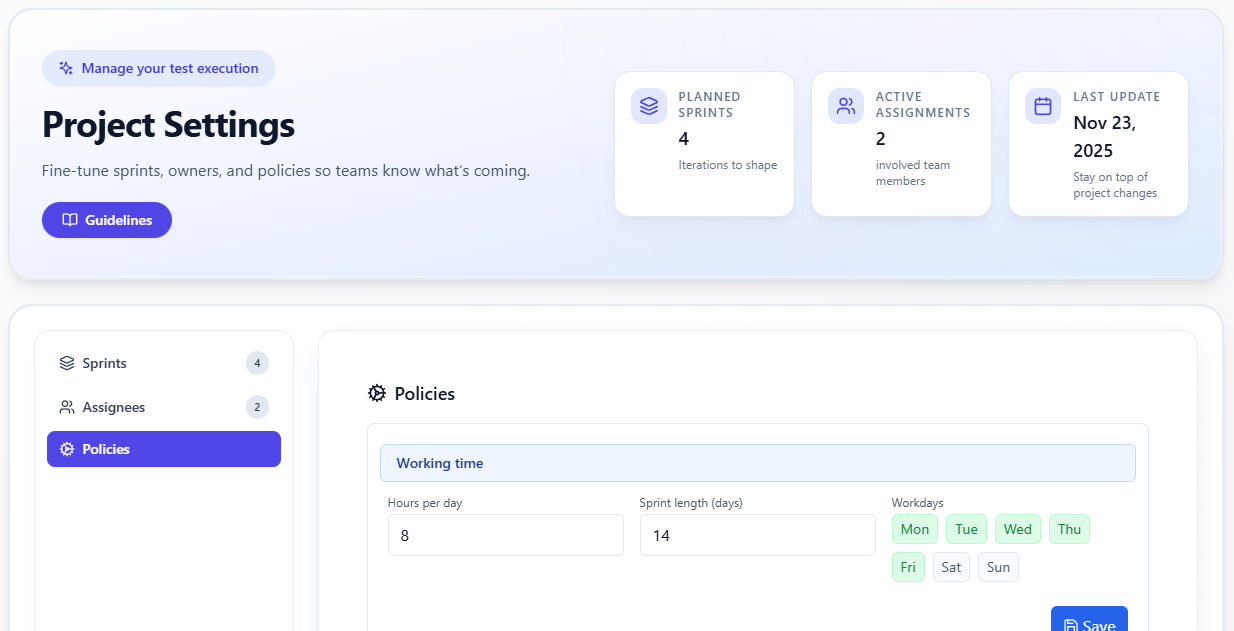
RiskRover will take everything you defined in the master test plan – scope, test levels, risks and people – and turn it into a concrete execution setup. Sprints, assignees and policies are all configured in one place, instead of being scattered across ad-hoc spreadsheets and side documents. Because these settings sit directly on top of the same project and test plan, you keep one continuous line from high-level strategy to day-to-day testing work that teams can actually follow.
Organise testing into realistic sprints and calendars
No more “magic” dates that ignore capacity and holidays.
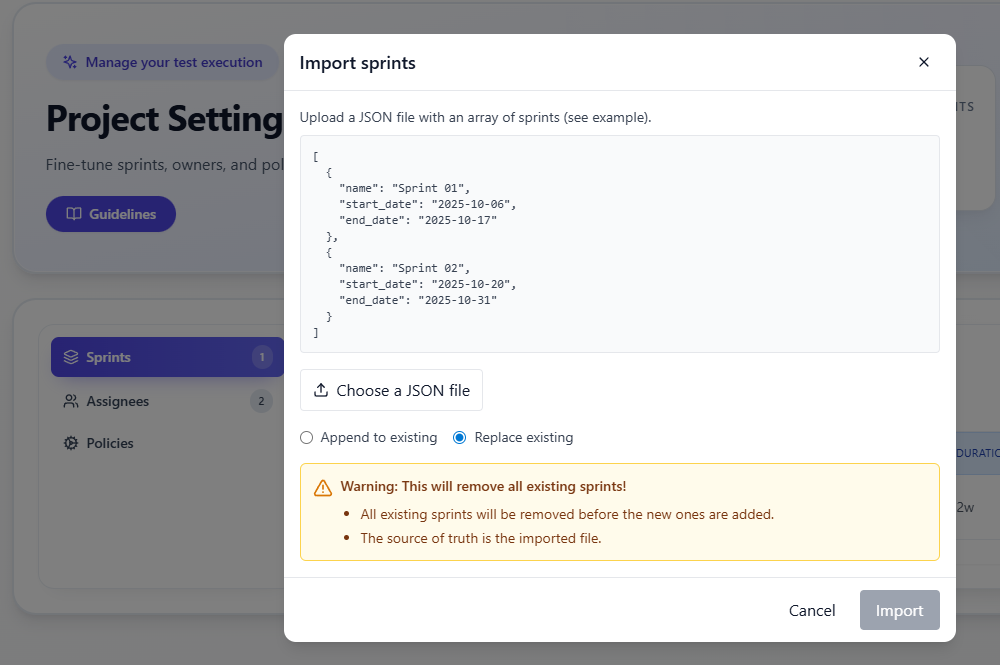
RiskRover will translate your strategy into sprints that match how your team really works. You can define iterations manually, import them from existing tools via JSON, or generate them from the test levels in your master test plan. Working days, hours per day and holidays are all captured in a single policy, so sprint dates and durations are calculated automatically – without quietly scheduling work over weekends or public holidays. The result is a test schedule that stakeholders recognise and planners can genuinely trust.
Give every tester clear, ownable work items
Replace “testing is in progress” with concrete responsibilities.
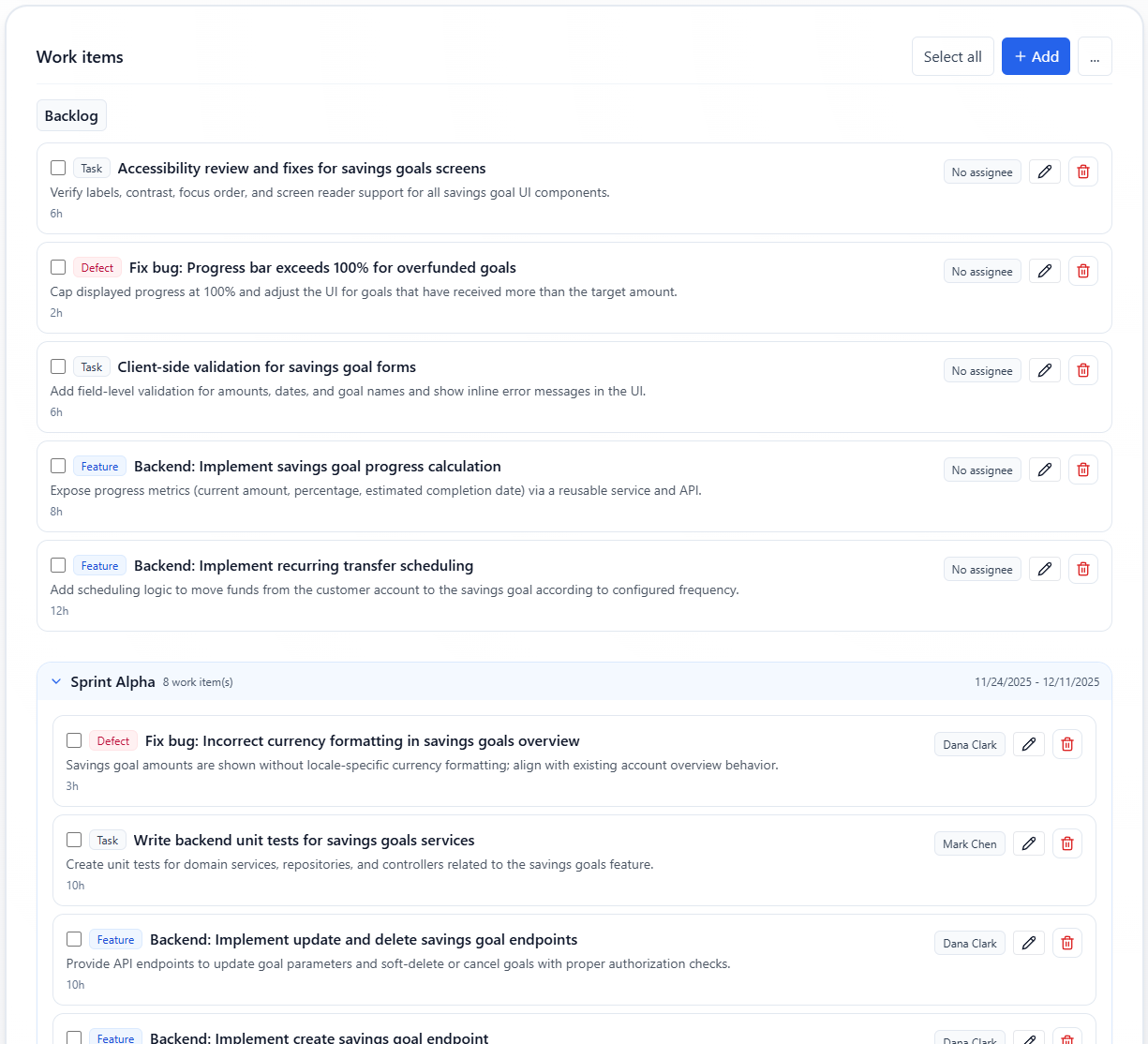
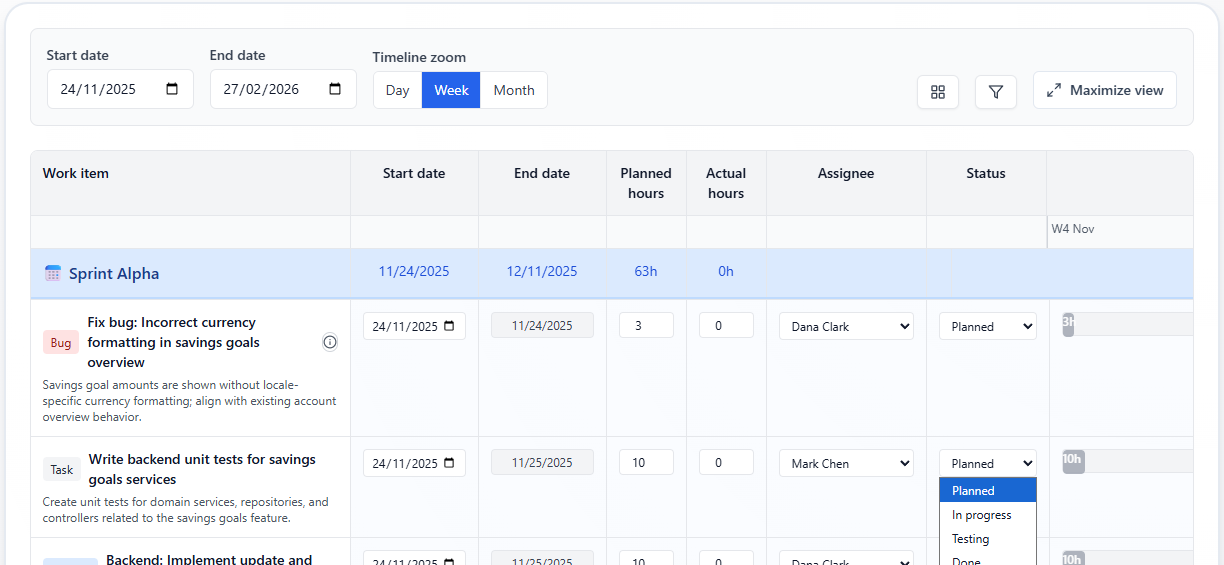
RiskRover will break execution down into focused work items: the smallest units of test work you want to plan and track. You can create them directly in RiskRover or import them in bulk as JSON, so existing work items from other test or ALM tools are transferred without manual rework. Each item is linked to a project, test level, optional sprint, one or more assignees, planned and actual effort, status and – where relevant – linked risks from the PRA. Test managers see exactly who is doing what, when and for how long. For testers that means clear expectations and priorities; for managers it means visibility and control without resorting to micro-management.
Keep execution risk-based with built-in risk tagging
Make sure the right tests happen first – and prove it.
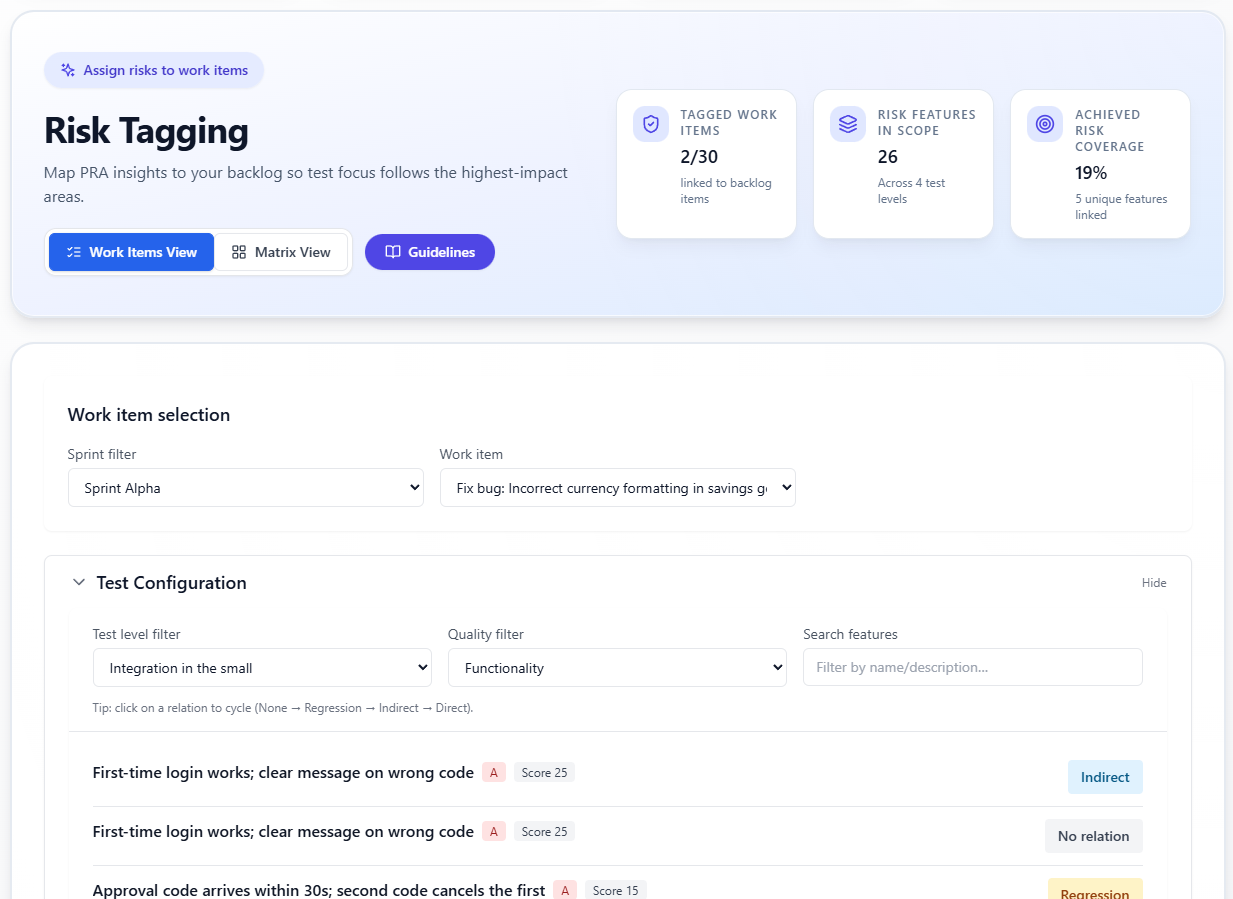
RiskRover can connect every work item back to the Product Risk Assessment you created in the planning flow. Using either a detailed work-item view or a matrix view, you tag how strongly each PRA item affects each piece of work: none, limited, indirect or direct. RiskRover then uses those links and impact levels to help you prioritise work items and test depth. Your execution backlog stays aligned with agreed risks and business impact – high-risk items get attention first, and you can clearly show stakeholders which risks are already covered and which are still open.
Keep plans, people and progress in sync
See status, bottlenecks and risk coverage in one place.
RiskRover will continuously tie together your execution settings, work items and risk tagging. Because work items carry sprints, assignees, effort and risk links, every status update flows straight into the Test Planning Gantt and dashboards. Managers can instantly see where the team is ahead or behind, which risks are adequately covered, and where capacity is overloaded – and then re-balance sprints or ownership without breaking the connection to the original plan. It turns your master test plan from a static document into an execution cockpit that stays aligned with reality.